Virginia Wildlife Area Closures: A Wake-Up Call for Parks On The Air?
Could POTA's runaway success become its own worst enemy?
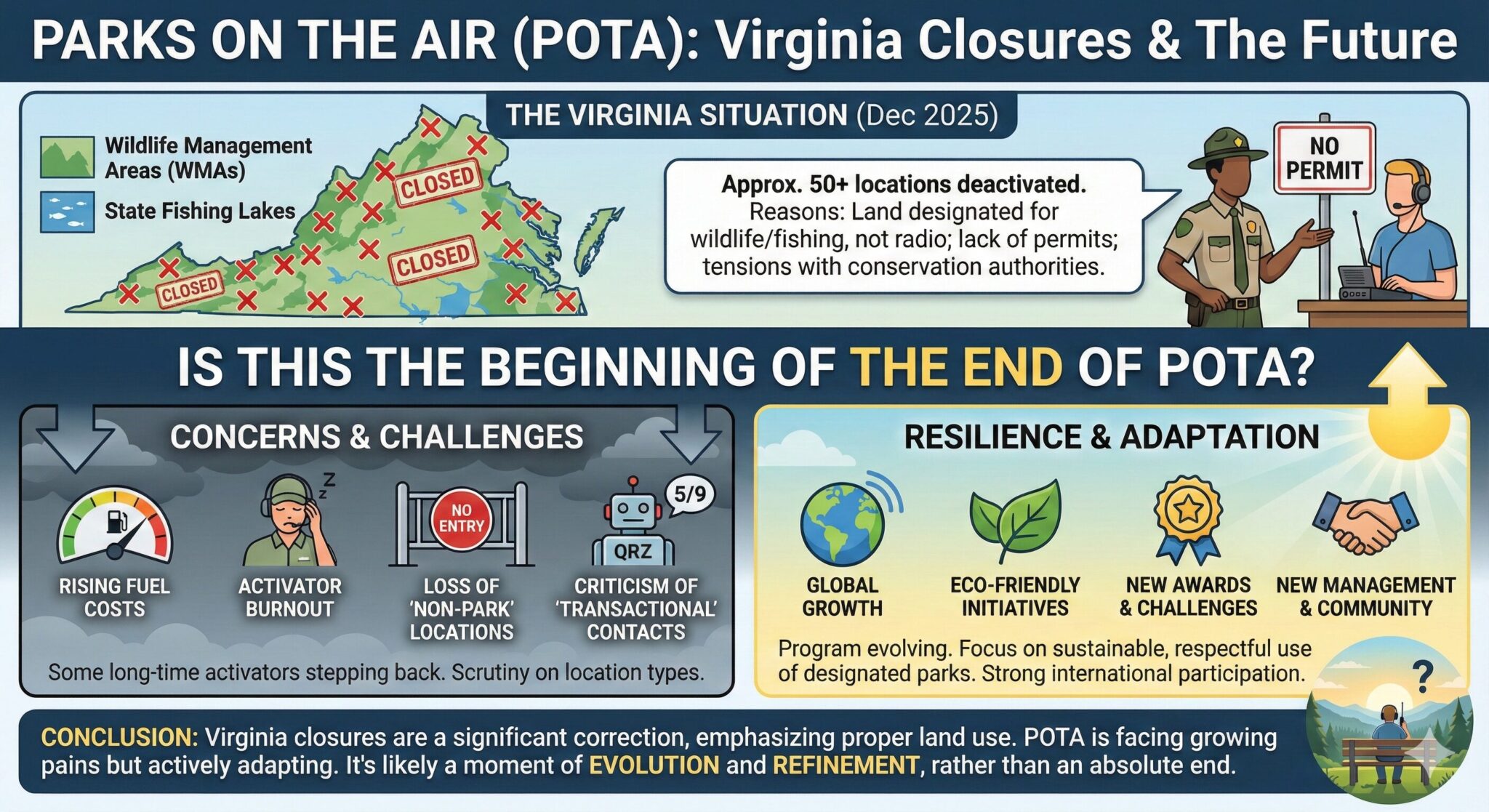
The recent closures of multiple Virginia Department of Wildlife Resources facilities have sent shockwaves through the amateur radio community, raising an uncomfortable question: Has Parks On The Air (POTA) become too popular for its own good?
Several wildlife management areas, boat ramps, and boating access sites have been closed by the POTA Virginia Mapping Rep. While the official reasons haven't been publicly detailed, many in the amateur radio community suspect the real culprit: the overwhelming volume of POTA activators and the behaviour of some disrespectful operators.
The POTA Phenomenon
Parks On The Air has experienced explosive popularity over the past few years, transforming from a niche amateur radio activity into a full-fledged movement. The numbers tell the story: thousands of activations occur daily across North America, with operators flocking to parks, wildlife areas, and game lands that were once the quiet domain of hunters and fishermen.
Why the explosive growth? Several factors have aligned perfectly:
1. Incredibly Low Barrier to Entry
Unlike traditional ham radio setups, which require towers, beam antennas, and significant investment, POTA requires minimal equipment. A modest HF radio, a wire antenna, and a battery can get you on the air for under $500. For many operators, this accessibility is revolutionary.
2. An Answer to HOA Restrictions
Homeowners' associations have long been a source of frustration for amateur radio operators, often prohibiting the use of external antennas. POTA offers these restricted operators a lifeline - why fight your HOA when you can drive 20 minutes to a park and operate freely?
3. The Gamification Effect
POTA's online platform, complete with maps, statistics, and achievement tracking, has gamified amateur radio in a way that appeals to modern operators. The thrill of "hunting" rare parks or activating all parks in a state creates an addictive feedback loop.
4. Community and Social Media
The POTA community is active, supportive, and evident on social media. Success stories, portable setups, and friendly competition drive even more operators to participate.
The Unintended Consequences
But success comes with serious challenges. Wildlife management areas and game lands were established with specific purposes: habitat conservation, hunting, fishing, and wildlife research. These areas often have limited infrastructure compared to traditional state parks - fewer parking spaces, narrower roads, and sensitive ecosystems.
Now, these once-quiet locations see daily visits from POTA operators, sometimes multiple activators per day on busy weekends. Park managers accustomed to seasonal hunting traffic are now dealing with year-round amateur radio enthusiasts - and not all of them are acting responsibly.
The Real Problem: Volume and Disrespect
While the Virginia DWR hasn't issued official statements connecting the closures to POTA activities, the timing is suspicious. Reports from the field paint a troubling picture:
- Overcrowded parking areas with POTA operators taking up spaces intended for hunters and fishermen
- Antenna installations are damaging trees or left behind as litter
- Blocked access roads from poorly parked vehicles
- Noise complaints from operators running voice modes near other recreational users
- Disregard for posted rules about operating hours, designated areas, and vehicle restrictions
- Confrontational behaviour when questioned by wildlife officers or other park users
The low barrier to entry that makes POTA so accessible also means that newcomers may not understand outdoor ethics or the fragile relationship between amateur radio and public land management. Some operators treat these wildlife areas like drive-through activation points rather than the conservation lands they deserve.
Wildlife agencies are already stretched thin with budget constraints and staffing challenges. When amateur radio operators become a source of complaints rather than responsible recreational users, closures become inevitable.
Is This POTA's "Kiss of Death"?
The phrase sounds dramatic, but the concern is legitimate. If land managers begin to view amateur radio operators as a burden, we could see:
- More closures or restrictions on wildlife management areas across the country
- Permit requirements that add bureaucracy and cost
- Designated "activation areas" that limit operating flexibility
- Time restrictions on when operations can occur
- Complete bans on amateur radio activities in sensitive areas
- Removal of sites from the POTA database
What happens in Virginia won't stay in Virginia. Land managers across the United States communicate with each other. If wildlife management areas become problematic due to POTA traffic, other states will take notice and act preemptively.
The Path Forward
POTA's success need not be its downfall, but the amateur radio community must act responsibly - now:
- Leave No Trace: Pack out everything you pack in, including every piece of wire, zip tie, and trash. Inspect your operating area before leaving.
- Respect Other Users: Remember that hunters, fishermen, and wildlife researchers have priority in wildlife management areas. Be courteous and unobtrusive.
- Follow all rules: operating hours, vehicle restrictions, and designated areas - these aren't suggestions. Violating them reflects poorly on the entire amateur radio community.
- Self-Regulate: If you see irresponsible behaviour, speak up. The POTA community needs to police itself before park managers do it for us.
- Communicate: Reach out to park managers proactively. Explain what POTA is and demonstrate that operators support conservation.
- Diversify Locations: Stop hammering the same convenient wildlife areas. Regular state parks, national forests, and other sites can absorb more use and have better infrastructure.
- Support Conservation: Put your money where your antenna is - donate to park foundations and volunteer for habitat restoration projects.
- Quality Over Quantity: Do you really need to activate that same wildlife area for the third time this month? Consider whether your activation is worth the impact.
A Call to Action
The Virginia closures should serve as a wake-up call. Amateur radio operators have always taken pride in being good spectrum citizens and responsible community members. Now we must prove we can be good land stewards, too.
Every irresponsible activation - every damaged tree, every blocked road, every confrontation with a wildlife officer - brings us closer to widespread restrictions that will harm the entire community. The operators who treat these areas like personal playgrounds are jeopardizing access for everyone.
POTA has democratized HF operations in ways that previous generations couldn't have imagined. It would be tragic if this accessibility led to restrictions that make the hobby even less accessible than before - but that's precisely where we're headed if behaviour doesn't change.
Only Time Will Tell
The coming months will determine whether Parks On The Air can scale sustainably, or whether its popularity will indeed prove to be its downfall. The answer lies not with program administrators or park managers, but with each operator who throws an antenna in a tree.
Will we rise to the challenge and demonstrate the responsibility that amateur radio is supposed to embody? Or will we allow a few bad actors and an epidemic of thoughtlessness to destroy what POTA has built?
The Virginia closures are just the beginning. What happens next is up to us.
73, and for the sake of the program, please operate responsibly.