

Why Do Ham Radio Operators JAM Each Other?
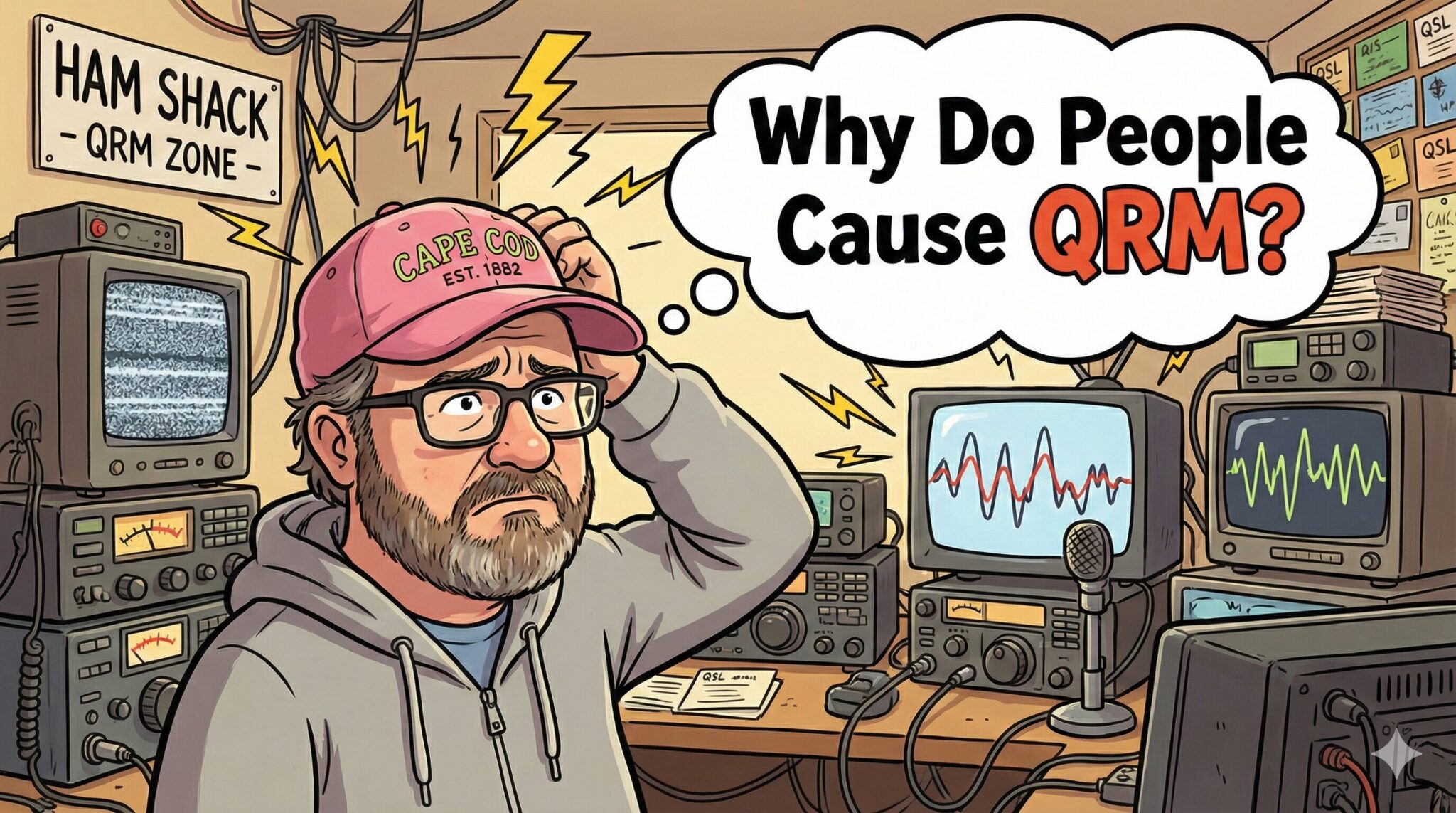
The amateur radio community is built on principles of courtesy, cooperation, and shared spectrum use. Yet anyone active in the hobby for any time has encountered them: operators who seem determined to make everyone else as miserable as they are. Whether it's deliberate interference with Parks on the Air (POTA) activations, jamming of DXpeditions, or constant on-air complaints about how everyone else is "ruining the hobby," these behaviours leave many hams scratching their heads.
I love the term "The Crusties" for these perpetually discontent operators—it perfectly captures the hardened, inflexible nature of their thinking. But understanding The Crusties helps us understand a larger question: Why would anyone deliberately interfere with their fellow operators? What satisfaction could come from disrupting others' enjoyment of the hobby?
Who Are "The Crusties"?
The Crusties are those operators who seem to have forgotten why they got into amateur radio in the first place. Instead of finding joy in contacts, experimentation, or community, they've become embittered critics of nearly everything:
- POTA activators? "Ruining the bands with their QRP garbage!"
- FT8 operators? "That's not real ham radio!"
- New technicians? "Kids these days don't know CW, they're not real hams!"
- DXpeditions? "Just a bunch of glory hounds!"
- Contesters? "Bunch of point-chasers with no manners!"
- Ragchewers? "Get off the air, you're tying up the frequency!"
No matter what anyone does, The Crusties find fault with it. And for some, complaining isn't enough—they escalate to active interference, jamming, and deliberate QRM.
The Crusty Mindset: From Complaints to Jamming
What's particularly insidious about The Crusties is their missionary zeal to drag everyone else down to their level of discontent. The constant negativity can follow a predictable escalation:
"Back in MY Day..." (The Gateway Complaint)
The Crusties often romanticize some golden age of amateur radio that probably never existed. This nostalgia becomes the foundation for viewing all change as decay.
Gatekeeping as Identity (The Defensive Stage)
For some Crusties, putting others down becomes their primary form of participation in the hobby. Unable or unwilling to enjoy modern operating modes or activities, they define their identity in terms of what they're against rather than what they're for.
The Scarcity Mentality (The Territorial Phase)
Many Crusties operate from a belief that someone else's enjoyment somehow diminishes their own. They begin to see certain frequencies or modes as "theirs," and perceive other operators as intruders who need to be driven away.
From Complaints to Action (The Jamming Phase)
Not every Crusty becomes a jammer, but the progression is clear:
- Start with complaints about how others are "ruining" the hobby
- Escalate to confrontation by calling out operators on-air
- Justify interference as "policing" the bands or "teaching lessons."
- Full jamming becomes rationalized as protecting "real" ham radio
The Crusty mindset provides the mental framework to justify anti-social behaviour: "I'm not the bad guy—I'm defending the hobby from these interlopers!"
The Psychology Behind Deliberate Interference
While it's difficult to fully understand the motivations of those who intentionally cause QRM, several psychological factors help explain the phenomenon:
The "Troll" Mentality
Just as internet trolls derive satisfaction from provoking reactions online, radio jammers may get a sense of power from knowing they're frustrating others. The anonymity of radio (though callsigns are meant to prevent this) can embolden bad behaviour.
Attention-Seeking Behaviour
Some jammers may feel ignored or marginalized within the ham radio community. Causing interference guarantees they'll get attention—even if it's negative attention. For The Crusties, negative attention can feel better than no attention at all.
Terminal Uniqueness and Resentment
Some Crusties believe their way of operating is the only "legitimate" form of amateur radio. They harbour resentments against specific operators, certain operating modes, or popular programs like POTA. They may feel these activities are "ruining" the hobby or taking over their" frequencies. Rather than engaging constructively, they lash out through interference.
Competition and Jealousy
DXpeditions and special event stations often create pileups and excitement. Some operators who struggle to make these contacts themselves may resort to jamming out of frustration or jealousy, adopting a "if I can't have it, nobody can" attitude.
Mental Health Considerations
In some cases, persistent jamming behaviour or extreme negativity may indicate deeper psychological issues. The compulsive need to disrupt others' activities or constantly complain, especially when it brings no tangible benefit, can be a sign of personality disorders or other mental health challenges.
The Impact on the Amateur Radio Community
The effects of The Crusties—whether they're "just" complaining or actively jamming—extend far beyond simple annoyance:
- Newcomers are discouraged from pursuing the hobby when their first experiences involve dealing with negativity or jammers
- Rare DX opportunities are lost when jammers target expeditions to remote locations
- Innovation is stifled when gatekeepers attack new modes and technologies
- The hobby's reputation suffers when non-hams witness unprofessional behaviour
- Enforcement resources are wasted that could be used for legitimate spectrum management
- Club culture becomes toxic when Crusties dominate meetings with complaints
- Online communities fracture along "us versus them" lines
The beautiful irony is that The Crusties complain about the hobby dying or changing for the worse, yet they are often the biggest obstacle to growth and vitality. Their negativity drives away newcomers, stifles innovation, and creates exactly the stagnation they claim to oppose.
Dealing with The Crusties and Jammers
While we may never fully understand or eliminate this behaviour, the community can respond effectively:
On the Air
When Facing Negativity:
- Don't engage: Crusties feed on argument and attention
- Kill them with kindness: Politeness in the face of grumpiness can be disarming
- Set boundaries: A simple "73" and moving on is perfectly acceptable
When Facing Deliberate Interference:
- Don't feed the trolls: Acknowledging jammers often encourages them; silence can be more effective
- Document everything: Record dates, times, frequencies, and descriptions for potential FCC reports
- Move frequencies when practical: Sometimes the best response is simply to QSY
- Maintain professionalism: Don't retaliate with your own interference
In Clubs and Online
- Challenge gatekeeping: Politely but firmly push back on "not real ham radio" arguments
- Celebrate diversity: Actively support different modes, activities, and operators
- Focus on positive voices: Amplify those who build up rather than tear down
- Model good behaviour: Be the ham you'd like others to be
- Support conflict resolution: Mediate disputes before they escalate to jamming
Community and Organizational Actions
- Report to authorities: File complaints with the FCC or your national regulatory body for persistent jamming
- Support enforcement: Advocate for adequate funding and authority for spectrum enforcement
- Direction finding initiatives: Some radio clubs organize efforts to identify persistent jammers
- Education programs: Promote understanding of shared spectrum principles and operating courtesy
- Mentor newcomers: Help new hams understand proper operating procedures and how to handle negativity
For Your Own Sanity
- Recognize the pattern: Understanding that this is their issue, not yours
- Maintain perspective: The Crusties are a vocal minority, not the majority
- Find your tribe: Connect with positive operators who share your interests
- Remember your "why": Keep focused on what brought you joy in the hobby
- Don't let them steal your joy: Their misery is optional for you
The Antidote to Crustiness
The best response to The Crusties and jammers is simply to keep enjoying amateur radio in all its diverse forms:
- Activate that park and enjoy the pileup
- Work that DXpedition and celebrate the contact
- Try that new digital mode you've been curious about
- Mentor that new ham without worrying about Crusty gatekeepers
- Experiment, learn, and grow in whatever direction excites you
- Share your enthusiasm on social media, YouTube, or your local club
Every time you refuse to let The Crusties define your experience, you win. Every new ham you encourage, every successful activation, every enjoyable QSO is a vote for the positive future of amateur radio.
Meanwhile, programs like POTA are bringing thousands of new and returning operators to the bands. Digital modes are making HF accessible to apartment dwellers and those with limited space. YouTube channels and online communities are creating vibrant learning environments for new hams.
The hobby isn't dying—it's evolving. And The Crusties hate that because evolution means they're no longer the gatekeepers they imagine themselves to be.
A Persistent Mystery—and a Clear Choice
Ultimately, the question of why some operators deliberately cause interference or constantly complain may never have a fully satisfying answer. The motivations are likely as varied as the individuals involved—from simple trolling to territorial disputes to deeper psychological issues.
What remains clear is that this behaviour contradicts everything amateur radio stands for. Our hobby thrives on cooperation, mutual respect, and the shared joy of communication. Those who deliberately interfere or constantly tear others down not only harm individual operators butalso damage the fabric of our community.
Perhaps the best we can do is refuse to let them define our experience. By maintaining our commitment to courtesy, continuing to enjoy the hobby despite obstacles, and supporting enforcement efforts when appropriate, we uphold the values that make amateur radio special.
The Crusties and jammers may never understand the joy that comes from making a successful POTA contact, completing a DXpedition chase, experimenting with a new mode, or simply having a pleasant ragchew. That's their loss—and all the more reason for the rest of us to protect and cherish these experiences.
So here's to the joy-bringers, the experimenters, the welcoming elmers, and everyone who refuses to become Crusty. Keep making those contacts, trying new things, and most importantly—keep having fun.
Because in the end, the best revenge against The Crusties is a life well-lived on the amateur bands.
73, and may your signals always be strong and your joy stronger!
Have you experienced The Crusties or deliberate interference during your ham radio activities? How did you handle it? What strategies have worked for maintaining your enthusiasm? The amateur radio community benefits when we share experiences and strategies for dealing with these unfortunate situations while maintaining the positive spirit that defines our hobby.