Radio Manners from Coast to Coast: Why "Contact" Isn’t Always the Right Call
Whether you are tucked away in a cozy basement shack in St. John’s, operating portable from a wind-swept ridge in the Rockies, or enjoying a quiet evening of DXing in rural Ontario, amateur radio is the ultimate way to stay connected across our vast landscape. But as any seasoned Canadian operator knows, the "Trans-Canada Highway" of our airwaves only stays clear when everyone follows the rules of the road.
Recently, during the excitement of the World Wide Award, a common source of confusion has been emerging regarding the bands that can slow down even the most efficient station. It is the misuse of the word "Contact."
Understanding the "Contact" Interrupt
In the world of Canadian amateur radio, brevity and clarity are just as important as a well-tuned antenna. While "Contact" sounds like a perfectly friendly thing to say, it is actually a specific procedural tool designed for interruption rather than initiation.
Think of it like a polite "pardon me" when you are trying to join a conversation already in progress at a local Tim Hortons. It is a signal to other operators that you wish to interject into an ongoing QSO or a directed net for a brief period.
When to Use "Contact" (The Right Way)
There are particular times when saying "Contact" is the proper etiquette. Use this term in the following scenarios:
- Breaking into an ongoing QSO: If you hear two stations in the middle of a long-form rag-chew and you have a pertinent piece of information to contribute, wait for the brief pause between their transmissions and announce "Contact" followed by your callsign.
- Urgent Needs: If you need to reach one of the parties before they sign off or change frequencies, "Contact" is the standard way to signal a priority request.
- Formal Nets: During a formal net—such as those run by various provincial amateur radio societies—saying "Contact" is a recognized way to get the Net Control Station’s (NCS) attention for emergency traffic or a quick "short-timer" check-in.
In these instances, the word signals that you aren't just looking for a chat, but that you have a specific reason to break the current flow of communication.
The Common Mistake: Answering a CQ
The most frequent error occurs when an operator uses "Contact" to answer someone calling CQ. When a station calls "CQ," they are essentially standing on their porch and shouting to the neighbourhood that they are open for business and listening for anyone who wants to talk. Because the frequency is already open and the operator is actively seeking a new connection, there is no conversation to "break into."
Using "Contact" to answer a CQ is problematic for several reasons:
- Missing Information: The operator calling CQ needs your callsign above all else. Saying "Contact" forces them to stop, ask for your callsign, and wait for a second transmission, doubling the time required.
- Creating Confusion: In a crowded band during a Radio Amateurs of Canada (RAC) contest, hearing "Contact" can sound like a priority or emergency break-in. This causes the operator to hesitate, thinking there is an urgent situation.
- Redundancy: By responding to a CQ, you are already attempting to make a contact. Saying the word is unnecessary and clutters the frequency.
The Proper Procedure for Answering a CQ
The correct procedure is much more straightforward and far more efficient. You should give your callsign using the standard International Phonetic Alphabet.
- Listen: Ensure the CQing station has finished its transmission.
- Respond with your callsign only: If a station says "CQ CQ, this is VE3ABC calling CQ and standing by," your response should be "VE7XYZ" or "Victor Echo Seven X-Ray Yankee Zulu."
- Wait for acknowledgment: The CQing station will then repeat your callsign and give you a signal report.
This allows the other station to immediately log your prefix and location, keeping the "rate" high and the frequency clear for the next operator.
Resources for Better Operating
To sharpen your skills and ensure you're following the best practices of the hobby, check out these excellent resources:
- Radio Amateurs of Canada (RAC) Operating Manual: The definitive guide for Canadian hams.
- ARRL’s Ethics and Operating Procedures for the Radio Amateur: A comprehensive PDF guide used worldwide.
- The DX Code of Conduct: Essential reading for anyone participating in awards or chasing rare stations.
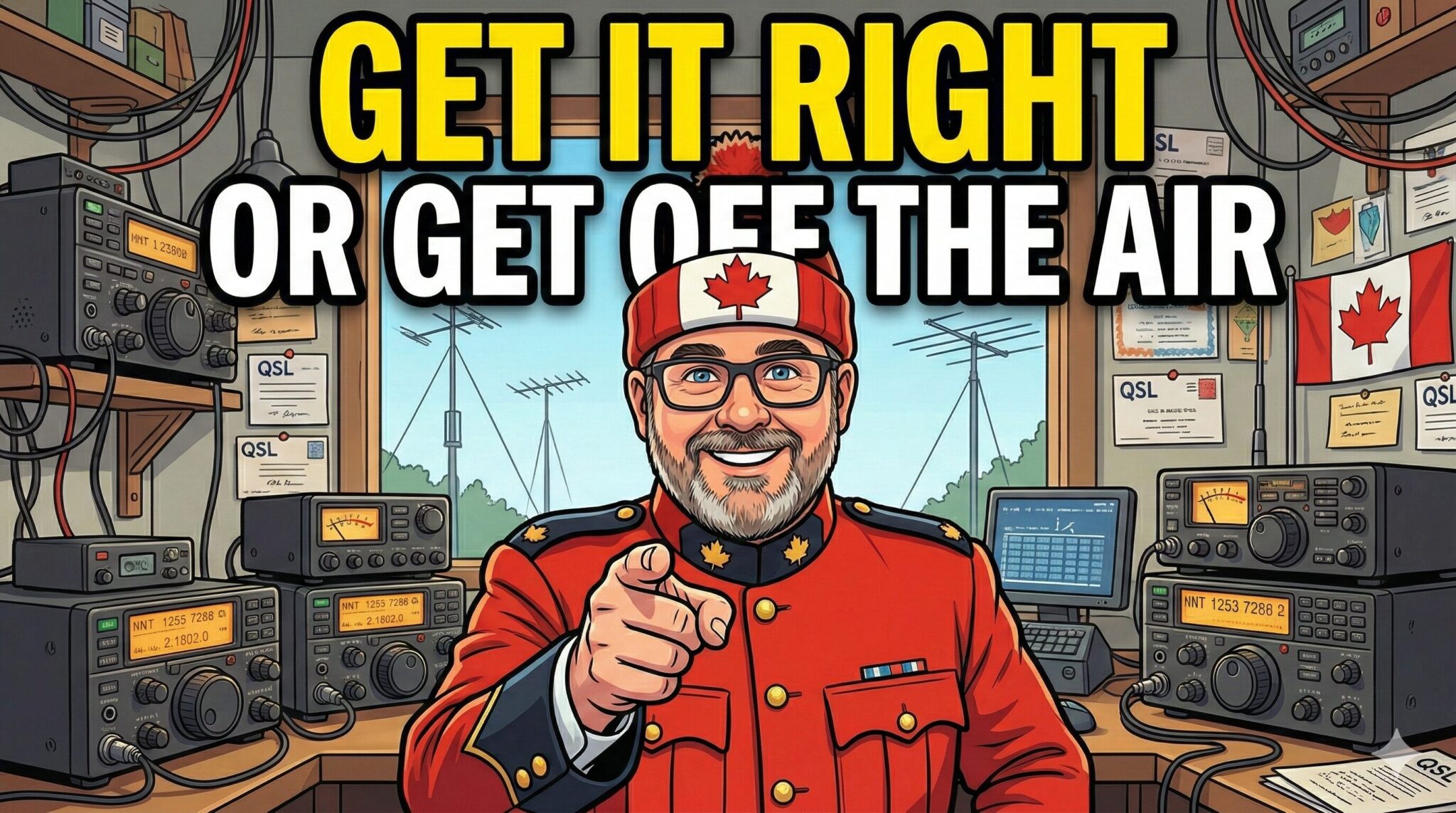
At the end of the day, the word "Contact" is a tool for interruption, not initiation. By reserving it for breaking into existing conversations and using only our callsigns to answer a CQ, we keep the Canadian airwaves professional, efficient, and friendly for everyone. Whether you are a newcomer or have been licensed since the days of spark-gap transmitters, practicing good etiquette ensures that our hobby remains a source of pride in the Great White North.